by admin | Dec 3, 2022 | Uncategorized
Recognizing the signs of domestic abuse in others requires a high degree of situational awareness, as many survivors go to great lengths to conceal their reality. While it is difficult to know exactly what occurs behind closed doors, certain behavioral patterns and physical indicators serve as critical “red flags.” If you observe these symptoms in a friend, family member, or colleague, it is essential to take them seriously and offer support with discretion.
Recognizing the Indicators of Domestic Abuse
- Signs of Coercive Control and Anxiety: Survivors often exhibit a heightened state of hyper-vigilance or an intense “anxiety to please” their partner. This may manifest as immediate compliance with a partner’s demands, frequent “check-ins” to report their location, or receiving a disproportionate number of harassing phone calls and messages. They may also frequently apologize for or mention their partner’s “temper” and possessiveness as a way of justifying the control.
- Physical Indicators of Violence: Physical abuse is often masked by a series of unlikely “accidents” or unexplained injuries. A key indicator is a sudden change in attire such as wearing heavy clothing or long sleeves in the summer or sunglasses indoors specifically designed to hide bruising or scars. Furthermore, frequent, unexplained absences from work, school, or social gatherings are often a sign that an individual is being prevented from appearing in public due to visible injuries.
- Indicators of Forced Isolation: Isolation is a primary tactic used to foster total dependency. Signs include a noticeable restriction from visiting family and friends, rarely being seen in public without their partner, or having severely limited access to shared resources like money, credit cards, or transportation.
- Psychological and Behavioral Shifts: Significant personality changes are often the most telling signs of long-term abuse. A previously outgoing or confident person may become suddenly withdrawn, quiet, or apologetic. Persistent symptoms of depression, unexplained anxiety, or expressions of hopelessness are serious psychological indicators that the individual is navigating an environment of systemic fear and control.
by admin | Dec 3, 2022 | Uncategorized
Violence Against Women in Punjab: 2024-2025 Statistics
|
Category
|
Reported Cases (Annual 2024)
|
Bi-Annual Stats (Jan–Jun 2025)
|
|
Rape
|
4,641
|
~1,620 (Avg. 9 per day)
|
|
Kidnapping/Abduction
|
20,720
|
9,180 (Avg. 51 per day)
|
|
Domestic Violence
|
1,167
|
4,320 (Avg. 24 per day)
|
|
Honor Killings
|
225
|
120
|
|
Acid Throwing
|
35-40
|
Ongoing Monitoring
|
|
Cyber Harassment
|
2,500
|
Increasingly Reported
|
Violence Against Women in Khyber Pakhtunkhwa (2024–2025 Stats)
|
Reported Annual Cases (2024) |
Key Trend |
| Rape & Attempted Rape |
482 |
Significant increase in reporting due to specialized desks. |
| Honor Killings |
156 |
While lower than 2015 peaks, underreporting in merged districts remains high. |
| Domestic Violence |
1,280 |
Now the most reported category following the 2021 Act. |
| Murder (Femicide) |
245 |
Often linked to domestic disputes or inheritance. |
| Suicide (Women) |
190 |
High correlation with forced marriages and domestic trauma. |
Violence Against Women in Sindh (Annual Reported Stats 2024–2025)
| Category |
Reported Annual Cases (2024) |
Key Trend |
| Rape & Gang-Rape |
742 |
Significant increase in reporting in Karachi and Hyderabad. |
| Honor Killings (Karo-Kari) |
176 |
While reported numbers have dropped, activists note many cases are still buried as “accidents.” |
| Domestic Violence |
1,840 |
The most frequent complaint filed with the Sindh Ombudsman and Police. |
| Murder (Femicide) |
310 |
Often related to “Honor” or domestic disputes. |
| Acid & Burn Crimes |
25-30 |
Stricter regulation of acid sales has led to a decrease in these specific attacks. |
Violence Against Women in Balochistan (2024–2025 Stats)
| Category |
Reported Annual Cases (2024) |
Key Trend |
| Sexual Violence & Harassment |
1,142 |
Includes rape, gang-rape, and harassment; numbers are rising due to increased urban reporting. |
| Domestic Violence |
456 |
Encompasses physical assault, injuries from edged tools, and murder attempts. |
| Honor Killings (Siyah-Kari) |
82 |
Often underreported in remote tribal areas; Quetta and Jaffarabad are reporting hotspots. |
| Acid & Burn Attacks |
15-20 |
Significant decrease since 2015 due to stricter control and swift police action in Quetta. |
| Kidnapping/Abduction |
615 |
Frequently linked to forced marriages and domestic disputes. |
Pakistan Demographic & Health Survey (PDHS)
While the primary data remains the 2017-18 PDHS (as the latest full cycle), 2024-2025 updates from the National Commission on the Status of Women (NCSW) and supplemental 2023 reports highlight critical ongoing trends:
- Physical & Sexual Violence: 28% of women (15–49) have experienced physical violence, while 6% have experienced sexual violence since age 15.
- Violence During Pregnancy: 7% of women have reported experiencing violence while pregnant, a figure that remains stagnant.
- Spousal & Emotional Abuse: 34% of ever-married women have experienced spousal physical, sexual, or emotional violence. Emotional violence remains the most prevalent form at 26%.
- Controlling Behavior: 8% of married women report their husbands display three or more specific controlling behaviors (restricting movement, monitoring communication).
- Injury & Reporting: 26% of women sustain physical injuries from abuse. However, 56% of survivors still never seek help or speak to anyone about the violence, largely due to social stigma and lack of accessible support.
- Justification of Abuse: In recent 2024/2025 sub-analyses, 42% of women and 40% of men still believe a husband is justified in beating his wife under at least one circumstance.
Global Gender Gap Index Report (2025 Update)
Pakistan’s performance on global equity scales has reached a critical point. According to the World Economic Forum’s Global Gender Gap Report 2025, Pakistan is now ranked 148th out of 148 countries, placing it at the very bottom of the global index.
Pakistan’s 2025 Ranking across the Four Pillars:
- Overall Ranking: 148th (Lowest globally, behind Sudan and Iran).
- Economic Participation & Opportunity: 143rd (Stagnant female labor force participation, currently at roughly 22-25%).
- Educational Attainment: 139th (While literacy rose to 48.5%, gender parity in enrollment remains a major challenge).
- Health and Survival: 132nd (Relative stability in life expectancy parity, but remains low in regional comparisons).
- Political Empowerment: 112th (A sharp decline noted in 2025 as the share of women in ministerial positions dropped to near zero).
by admin | Dec 3, 2022 | Uncategorized
The “Cycle of Violence” is a psychological framework that explains why it is so difficult for survivors to leave abusive relationships. It is characterized by a predictable rotation of tension, explosion, and manipulation.
The Cycle of Abuse: Understanding the Pattern of Control
Domestic abuse is rarely a one-time event; it typically functions as a repetitive cycle designed to maintain power and keep the survivor trapped. Understanding these stages is the first step toward breaking the cycle:
- The Outbreak (Abuse): The partner lashes out with aggressive, belittling, or violent behavior. This is a deliberate power play intended to establish dominance and instill fear.
- The Shift (False Guilt): Following the episode, the abuser may exhibit signs of guilt. However, this is seldom remorse for the pain caused; rather, it is a self-centered fear of being caught or facing legal and social consequences.
- Rationalization (Excuses): The abuser creates a narrative to avoid accountability. They may blame external stressors or the survivor themselves “You made me do it” to justify their actions.
- The “Honeymoon” Phase (Normalcy): To prevent the survivor from leaving, the abuser may revert to charming or “normal” behavior. They may act as if nothing happened or offer excessive apologies, creating a false sense of hope that change has finally occurred.
- The Escalation (Fantasy and Planning): Behind the scenes, the abuser begins to fantasize about the next power play. They dwell on perceived slights and develop a mental plan to “punish” the survivor again.
- The Trigger (The Set-up): The abuser creates a situational trap, a specific set of circumstances designed to provoke a conflict giving them a self-invented “justification” to restart the cycle of violence.
While apologies and loving gestures can be incredibly persuasive, they are often calculated tactics to maintain control. It is vital to recognize that this cycle is systemic and rarely breaks without professional intervention. The dangers of staying are significant, and prioritizing your safety is the most important step.
by admin | Dec 3, 2022 | Uncategorized
The White Ribbon Ambassador Program is a premier leadership initiative designed to engage influential men as high-profile advocates for gender equality and the prevention of violence against women (VAW). By recruiting leaders from the corporate sector, media, sports, academia, and the arts, the program leverages personal influence to challenge the social norms that perpetuate domestic and digital abuse. Ambassadors serve as the “face of change,” using their platforms to model positive masculinity and encourage other men to join the movement for a safer, more equitable Pakistan.
The Role of a White Ribbon Ambassador
- Influence & Advocacy:Use professional and social platforms to mainstream the conversation around women’s rights and the legal protections available under Pakistani law.
- Public Pledging:Lead by example by taking the National White Ribbon Pledge: “I swear never to commit, excuse, or remain silent about violence against women and girls.”
- Corporate Leadership: Encourage the adoption of gender-sensitive policies and anti-harassment protocols within their respective organizations.
- Youth Mentorship: Participate in university speaking engagements and “Youth for Change” forums to inspire the next generation of male leaders.
Why Become an Ambassador?
Becoming an ambassador means joining a global fraternity of men dedicated to social justice. In Pakistan, our ambassadors work closely with theNational Commission on the Status of Women (NCSW)and other stakeholders to ensure that their advocacy is backed by the latest legislative research and data. By aligning with White Ribbon, leaders demonstrate a commitment to Corporate Social Responsibility (CSR) and play a direct role in improving Pakistan’s standing on the Global Gender Gap Index.
-
- Use White Ribbon Pin, logo and resources that are provided as directed.
- Raising awareness, lead and advocate to end all kinds of violence against women.
- Speaking out against all forms of violence against women, as well as being involved in activities that promote women’s safety and wellbeing.
- Engaging and supporting men to involve in the movement through promoting (online/offline) and participating in the activities that can bring a change in society.
- Campaigning at the local and national level to promote that women’s safety is a men’s issue too.
- To promote the White Ribbon through engaging and educating your peers and challenge sexism in everyday life.
- Speak about ending violence against women at community events, TV programs, social media and where possible.
- Act as a positive role model for other men and boys by actively engaging in positive behaviour and actions towards women.
- Use White Ribbon presentation and material as well as follow guidelines for other events.
- Encourage people especially men to take the White Ribbon Pledge. To keep in touch with White Ribbon and offer feedback, suggestions and advice.
If you are interested in becoming a White Ribbon Ambassador or champion, the first step is to pledge “never to commit, excuse & remain silent about violence against women”.
-
- You will always adhere to the White Ribbon Values and will make sure people know that you are a volunteer, not an expert.
- You will never share any confidential or sensitive information that is disclosed to you in your role as an Ambassador.
- You will not accept gifts, money or any item of value from anyone in connection with your role as an Ambassador.
- You will avoid any act in any way that could bring White Ribbon into disrepute.
- By agreeing to the code of conduct you will be making the declaration “that nothing in my past or current personal life would damage the credibility of White Ribbon Pakistan”.
Register with us by filling up a form
Take White Ribbon Pledge and agree to our code of conduct
Certificate Award Ceremony and the announcement in the media (traditional and social media)
If you are interested in becoming a White Ribbon Ambassador, please contact us.
Email: info@whiteribbon.org.pk
Mobile: 03354887775
Phone: 042 35883570-2
Office Address: 2/12 M-Block, Gulberg III, Lahore.
Or fill out our form so that we can get back to you:
by admin | Nov 28, 2022 | Uncategorized
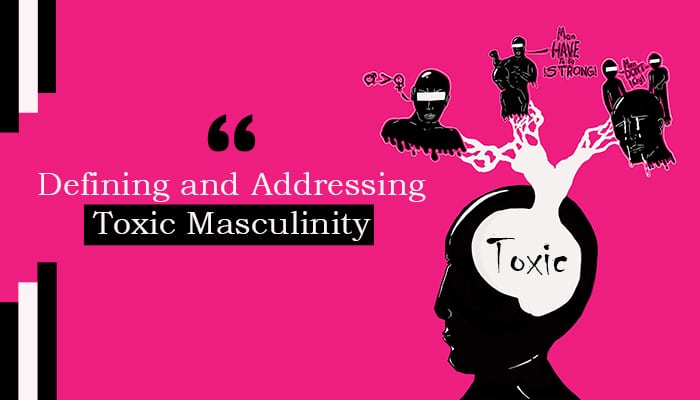
“Toxic masculinity” (sometimes called “harmful masculinity”) is often used as a catch-all term for the behaviours of men and masculine folks.
In reality, though, there’s plenty of room for someone to be masculine without being toxic or engaging in behaviour that’s dangerous or hurtful.
So what does the phrase actually mean? The popular term points to the very real problems of male violence and sexism.
If you think about the common narrative around men and boys that teaches them that boys don’t cry or that they should be able to walk it off, take it like a man under any circumstance, you could imagine how the habitual practice of not telling about your pain or worries could have significant implications.
There are downstream consequences of lacking a healthy outlet to dispense negative emotions. When you’re bottled up all the time, it’s like Whac-a-Mole. It will reappear in another way.
Common Traits of Toxic Masculinity
Traits of toxic masculinity include themes of:
- Mental and physical toughness
- Aggression
- Stoicism, or not displaying emotion
- Self-sufficiency
- Emotional insensitivity
Societal impact
While toxic masculinity definitely has effects on individuals, it can also have larger societal impacts.
Here are just a few of these impacts. Keep in mind that, while toxic masculinity plays a contributing role in these issues, it isn’t always the sole cause.
Rape culture
Toxic masculinity ideology tends to treat women as sexual objects, contributing to ongoing issues, like rape culture.
This refers to the tendency to remove blame from sexual assaulters and place it on the victim. “Boys will be boys” might sound harmless when it comes to kids roughhousing on the playground. But it can be used as an excuse for violent behavior or not respecting boundaries.
Violence
Toxic masculinity also teaches men and masculine folks that aggression and violence are key to solving problems — unless you want to appear weak.
The resulting violence, which can show up in many forms, including intimate partner violence, can have far-reaching effects on those who aren’t even directly involved.
Social exclusion
Again, there are plenty of men who do not exhibit toxic masculinity. Still, these individuals may be negatively affected by those who display those traits in the form of social exclusion. Especially among children and teens, those who don’t fit inside that predetermined box of what it means to be masculine might find themselves disliked because of it.
Addressing it
There’s no single answer to addressing the problem of toxic masculinity. Doing so requires societal shifts around several things, including gender stereotypes and the stigma surrounding mental health.
But, if you’re a man, there are a few things you can do to reduce the impact of toxic masculinity in both your own life and the lives of those around you:
- Be okay with acknowledging where you are. Everyone has a starting point. There’s no way to change or move forward if you aren’t able to be honest about the things you want to change. Maybe you weren’t a skilled communicator in past relationships. Or maybe you’ve relied on your physical size or strength to intimidate others. Don’t beat yourself up for your past actions. Put your attention on where you currently stand and how you can move forward.
- Have tough conversations. Ask your friends their perspective on how you handle tough situations or your biases in relation to masculinity. Do your part not to get defensive, and really listen to how your actions have impacted others. You might be surprised that certain things you did or said came across differently from how you intended.
- Do the work. Above all, undoing toxic masculinity as a man involves being true to yourself, not some false idea of the person you should be. Finding your true self is a process that takes time. A therapist can guide you through this process and help you alter unhelpful thinking patterns.
by admin | Nov 25, 2022 | Uncategorized
For the first time in Pakistan, White Ribbon, which is part of global men’s movement present in over 50 countries for ending violence against women and girls, has announced the launch of White Ribbon Workplace Gender Inclusion Awards for corporate sector in Pakistan.
Talking to the media Founder and President of White Ribbon Mr. Omer Aftab said that these awards will be presented annually to companies which use their position to advocate for gender equality and take steps to advance women’s empowerment. These awards are being launched on November 25, the White Ribbon Day for the Eradication of Violence against Women.
Mr. Aftab further added that White Ribbon Awards will be presented annually to the companies which advocate for gender equality and take steps to advance women’s empowerment at workplace. The awards will celebrate and acknowledge the best practices and policies of corporates that take part and highlight gender justice and gender inclusion for their workforce, customers, community and through their CSR and brand communication and advertisements.
All organisations that work on gender equality and have shown a positive impact regarding women empowerment at workplace are eligible to apply for these awards. There are three categories of White Ribbon Awards: Gender Inclusive Workplace, Gender Responsive Marketplace and Community Engagement and Partnerships. For all categories, survey forms will have to be submitted online. Finalists will be selected based on independent ranking system. ##
Editor’s note:
Violence against women is a shameful reality across the world. Mostly it is committed by men. It is rooted in gender inequalities, and it still far too often goes unnoticed and unchallenged. The White Ribbon Campaign exists to change this.
Men and boys wearing the White Ribbon declare that they will never commit, excuse, or remain silent about men’s violence against women. White Ribbon is one of the world’s largest male-led campaigns to end men’s violence against women. It started in 1991 in Canada, and is now active in over 50countries across the globe. Every year it is growing stronger as more men and boys realise that women’s and girls’ safety is their issue too.