
by admin | Jul 26, 2025 | Uncategorized
Incident Overview
A video that went viral in July 2025 showed a young couple identified as Bano Bibi and Ahsan Ullah being led into a desert area on the outskirts of Quetta. In daylight, they were shot at close range by a group of armed men after reportedly marrying without family approval. The woman had reportedly spoken directly before being shot, saying: “Walk seven steps with me, after that you can shoot me. You are allowed only to shoot me. Nothing more than that.” The video captured both victims being executed in a brutal act widely condemned across the country Wikipedia+15AP News+15The Express Tribune+15.
Investigation & Legal Response
-
Authorities in Balochistan responded swiftly. On discovering the viral footage, a terrorism case was registered, and arrest operations began immediately. A suspect was detained rapidly, and raids are ongoing to apprehend others involved Dawn+1Dunya News+1.
-
At least 11 to 14 suspects have been arrested, including the tribal elder, Sardar Sherbaz Khan Satakzai, who allegedly ordered the killings. The bride’s brother, suspected of pulling the trigger, is still at large Al Jazeera+5Pakistan Today+5The Express Tribune+5.
-
Balochistan’s Chief Minister, Sarfraz Bugti, described the act as “painful and disgusting” and guaranteed that those responsible would face full legal consequences. The Balochistan High Court took suo motu notice and ordered senior officials to appear before the court to deliver investigative updates Images+8Pakistan Today+8The Express Tribune+8.
Context: Honour Killings in Pakistan
-
The Human Rights Commission of Pakistan (HRCP) reported 405 cases of so-called honour killings in 2024 alone, with real numbers likely higher due to underreporting. Most victims are women killed by relatives for violating traditional norms The Times of India+9The Guardian+9www.ndtv.com+9.
-
Experts state that regional tribal authority and feudal systems in parts of Balochistan perpetuate these practices. When tribal chiefs or jirga decisions override legal systems, women’s rights are severely undermined Al Jazeera+1The Guardian+1.
Key Takeaways
| Element |
Details |
| Victims |
Bano Bibi and Ahsan Ullah |
| Location |
Desert near Quetta, Balochistan |
| Reason given for killing |
Marriage without family or tribal approval (labelled dishonour) |
| Number arrested |
11–14, including tribal elder |
| Legal charges |
Murder (Section 302 PPC), terrorism case |
| Government action |
FIR registered, high court intervention, active raids |
| Wider impact |
Public outrage, calls for stronger laws, end to feudal justice |
by admin | Jul 25, 2025 | Uncategorized
In Pakistan, workplace harassment is not just a personal or social problem. It is also a crime under the law. Still, many people, especially women, do not know their legal rights. Some are afraid to speak up because they fear being blamed, losing their job, or being judged by society.
At White Ribbon Pakistan, we believe that the first step to stop harassment is to create awareness. Every employee and employer must understand what harassment is and what the law says about it.
What is Workplace Harassment?
The Protection Against Harassment of Women at the Workplace Act 2010 explains harassment as:
Any unwanted behavior of a sexual nature that makes a person uncomfortable at work. This includes touching, talking, writing, or showing something inappropriate.
Some examples are:
-
Unwanted touching or body contact
-
Dirty jokes or comments
-
Constant staring
-
Following someone around in the office
-
Showing inappropriate pictures or videos
-
Offering job benefits in return for personal favors
What Does the Law Say?
The Protection Against Harassment of Women at the Workplace Act 2010 applies to:
-
Government and private offices
-
Schools, colleges, and universities
-
Non-profit organizations and homes where people are hired to work
The law asks every workplace to:
-
Make a special committee to handle complaints
-
Put up the law where everyone can see it
-
Appoint a person to make sure the law is followed
In 2022, the law was improved to protect all people, not just women. It also now includes online and work-from-home situations.
What are the Punishments?
If someone is found guilty of harassment at the workplace, they can be punished in different ways.
Small punishments include:
Big punishments include:
Also, according to Section 509 of the Pakistan Penal Code:
These punishments are given in addition to what the company decides.
How to File a Complaint
If someone is facing harassment, they can:
-
Send a written complaint to the company’s harassment committee
-
Contact the Ombudsperson appointed by the government
-
File a complaint with the police under Section 509 of the Penal Code
In Punjab, people can visit this website to file complaints:
ombudswoman.punjab.gov.pk
White Ribbon Pakistan’s Message
We at White Ribbon Pakistan ask all workplaces to follow the law properly. Every company must provide a safe and respectful space for women and all employees.
Nobody should have to suffer in silence. Let us work together to stop harassment and make sure every person is treated with respect and fairness.
Workplace safety is not a gift. It is a basic human right.
Need Help or Awareness Training?
Write to us at: info@whiteribbon.org.pk
Call us at: 042 35883570
by admin | Jul 22, 2025 | Uncategorized
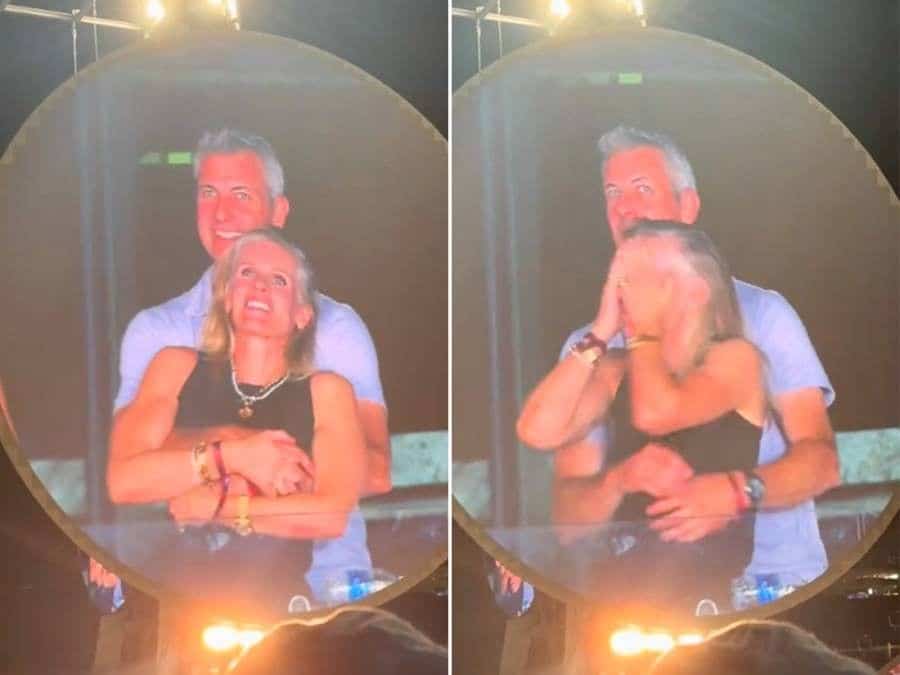
Recently, a CEO of a big tech company resigned after he was caught on camera involved in an inappropriate relationship with someone from his office. This video spread quickly, and people across the world started talking. It was not just about what he did in his personal life. It became a serious issue because he was in a position of power and trust. His actions were not only wrong but they were ethically very bad.
This incident teaches us an important lesson about how we should behave in our workplaces.
1. Everyone in the office is a colleague
Whether someone is a man or a woman, they are there to work with us, not to be taken advantage of. We should treat all coworkers with equal respect. There should be no room for any kind of misuse of position.
2. Managers and leaders must act responsibly
If you are a manager, a team leader, or in any position of authority, your behavior sets the tone for the entire workplace. Using your power to get personal favors or starting inappropriate relationships with juniors is completely wrong. It breaks trust and creates fear and discomfort.
3. Such behavior is not a small mistake
Some people think things like this are personal and should not matter. But in reality, these actions affect the whole team. They create unfairness, make others uncomfortable, and harm the work environment. It also gives a wrong message to society.
4. Trust is the base of a healthy workplace
People should feel safe and respected at work. If they feel their bosses or seniors can misuse power, it ruins that safety. It affects work, mental health, and the growth of the organization.
5. Ethics matter all the time
Ethical behavior is not something we turn on and off. It is not only for the office hours. Who we are in private also reflects on who we are in public. Leaders especially must remember this because people look up to them.
This incident is a wake-up call. We must remember that people are not objects. A woman or man working under us is not someone we can control for personal reasons. Respect, dignity, and fairness must always come first.
Let us all promise to make our workplaces safe and respectful. Let us use our positions to support others, not to hurt or control them. Because doing the right thing is not just about rules. It is about being a good human being.

by admin | Jul 18, 2025 | Uncategorized
On July 8, 2025, Humaira Asghar Ali was tragically found deceased in her locked apartment in DHA Phase VI, Karachi, during a court-ordered eviction prompted by months of unpaid rent. Police and a bailiff broke the door open to uncover her body in an advanced state of decomposition The Times of India+15Wikipedia+15The Siasat Daily+15.
The flat had no electricity—disconnected since October 2024—and the refrigerator held long-expired food. Rusted utensils, dry pipes, and unopened parcels added to the scene of profound neglect Pakistan Today+6Arab News PK+6www.ndtv.com+6.
The Timeline: Fall 2024 — A Death Unnoticed
Investigators pieced together that Humaira’s last known activity occurred on October 7, 2024. She attempted to contact 14 different people—including industry peers—but received no replies. After that date, all her mobile devices and social media went silent SAMAA TV+4Pakistan Today+4TNN – TRIBAL NEWS NETWORK+4.
Post-mortem analysis estimated the time of death at 8 to 10 months earlier—most likely in October 2024 Pakistan Today+11www.ndtv.com+11TNN – TRIBAL NEWS NETWORK+11.
State of the Remains: Severe Decomposition
Authorities described a disturbing scene: insects in her hair, internal organs liquefied into a “black-coloured mass,” and partially mummified remains. Despite the decay, no bone fractures or visible signs of violence were noted Wikipedia+3mint+3SAMAA TV+3.
With such decomposition, the autopsy couldn’t establish a cause of death. DNA and toxicology tests are ongoing to potentially reveal more insights The Economic Times+5www.ndtv.com+5mint+5.
Locked From Within: Mystery & Isolation
Investigators found that:
These clues complicate the narrative: was this natural or accidental? While early assessments lean that way, an active petition has stirred renewed calls to examine the possibility of foul play. Authorities are now reviewing digital evidence—call and bank records—amid the ongoing probe The Times of India+2The Economic Times+2The Economic Times+2.
Loneliness, Estrangement & The Public Response
Humaira had reportedly lived alone in Karachi for nearly seven years, working to revive her career while battling social and financial isolation. Police noted her repeated, unanswered pleas to friends for help before her disappearance The Express Tribune+12Arab News PK+12Arab News+12.
The post reveals painful details: her own father refused funeral rites, reportedly having severed ties with her over her career choices. The Sindh government had to arrange for her burial in Lahore’s Model Town, which saw minimal attendance The Times of India+3ABP Live+3Indiatimes+3.
Later, her brother denied estrangement and claimed the family had coordinated with authorities to retrieve her body though grieving personal circumstances delayed their response .
Broader Implications: Beyond One Tragedy
Humaira’s death resonated across Pakistan’s entertainment and civic circles:
-
It magnified concerns over urban isolation—one of many unattended deaths in major cities owing to shrinking community safety nets Moneycontrol+15Arab News PK+15The Siasat Daily+15.
-
Industry peers initiated support groups like Connectivity 101 aimed at daily check-ins and peer care within the arts community Arab News PK.
-
Discussions have also focused on the responsibility of landlords, building management, and the lack of CCTV or external oversight in detecting prolonged absence.
In Memory of Humaira: A Life Unseen, a Message Honored
Humaira Asghar Ali’s death stands as a heart-wrenching testament to the dangers of isolation—both social and emotional. She had a vibrant artistic portfolio as a model, actor, sculptor, and painter, but in the end, her voice faded unnoticed and unanswered.
Her story urges us to reflect on mental health awareness, community vigilance, and the crucial need for human connection—even in sprawling cities. Beyond the headlines and investigations, her final silence is a plea—to look closer, to reach out, and to remind one another: no one should disappear alone.
by admin | Jul 2, 2025 | Uncategorized
Violence against women is a deeply rooted societal issue, and for decades, the conversation has focused largely on empowering women to speak up. While this is vital, there is another crucial voice that has remained largely silent—men. In the movement to end gender-based violence, it is essential that men not only become allies but also actively speak out against injustice, abuse, and harmful norms.
Why Men’s Voices Matter
Men are often the perpetrators in cases of domestic abuse, harassment, and sexual violence—not because masculinity itself is violent, but because toxic societal norms equate power, control, and aggression with “manhood.” Breaking this cycle requires a cultural shift, and that shift starts when men challenge these harmful beliefs.
When men speak up:
-
They challenge other men who promote or commit acts of violence.
-
They validate survivors, showing that abuse is not acceptable.
-
They model healthy masculinity for younger generations.
Barriers to Speaking Out
Despite the importance of male involvement, many men remain silent. Why?
-
Fear of being ridiculed by peers.
-
Social conditioning to “mind your own business.”
-
Lack of awareness about the impact of their silence.
-
Guilt or discomfort about past behavior or complicity.
These barriers can only be broken through awareness, education, and safe spaces that encourage honest dialogue.
How to Encourage Men to Take a Stand
1. Educate from an Early Age
Schools, parents, and media must teach boys that respect, empathy, and nonviolence are part of true strength. Curriculum and storytelling must celebrate these values.
2. Promote Male Role Models
Highlight public figures, community leaders, and everyday men who speak out against violence. Representation matters—it shows others that it’s not just “okay” to speak up, it’s powerful.
3. Use Peer Influence
Peer influence can be one of the strongest tools in shaping behavior. Men are more likely to reflect on and change behavior if the message comes from someone they respect.
4. Support Men’s Mental Health
A healthy emotional environment enables men to unlearn toxic masculinity and engage in open discussions. Encouraging men to express emotions makes them better allies.
Campaigns and Movements Leading the Way
Organizations around the world, including White Ribbon, MenEngage, and HeForShe, are leading successful campaigns to involve men in the fight against gender-based violence. Their message is simple: “The silence must be broken.”
by admin | Jun 23, 2025 | Uncategorized
Digital violence, or technology-facilitated gender-based violence, refers to harmful actions carried out through digital means. These include the internet, social media, messaging apps, and even GPS tracking. For women and girls, this often results in emotional trauma, mental health deterioration, social isolation, and in some cases, physical danger.
Forms of Digital Violence
-
Cyberstalking
The constant surveillance of a woman’s online activities, using social media or spyware, often by former partners or strangers, creates a state of fear and helplessness.
-
Non-consensual Sharing of Intimate Images (Revenge Porn)
Images or videos shared without consent to shame, control, or blackmail the victim are among the most damaging forms of digital violence.
-
Online Harassment and Trolling
Hate speech, death or rape threats, and misogynistic trolling are rampant against women, especially those in public roles such as journalists, politicians, and activists.
-
Impersonation and Deepfakes
Fake profiles, manipulated videos, and stolen identities are used to harass, scam, or defame women, damaging reputations and careers.
-
Doxxing
Publishing a woman’s personal information like address, phone number, or workplace details online, exposing her to offline threats.
Impact on Victims
Digital violence doesn’t stay on the screen. It penetrates deep into a woman’s personal and professional life. Many victims report anxiety, depression, panic attacks, and loss of self-esteem. Some are forced to withdraw from public platforms, shut down their businesses, or even relocate for safety. The trauma is intensified by the anonymity of perpetrators and the difficulty of getting justice.
Challenges in Addressing Digital Violence
-
Lack of Legal Frameworks: In many countries, digital abuse is not clearly defined in law, leaving victims without proper recourse.
-
Platform Inaction: Social media platforms are often slow to respond to complaints and lack effective policies to protect users.
-
Victim Blaming: Women reporting online abuse are often blamed for “inviting” harassment based on how they dress, speak, or share online.
-
Low Reporting Rates: Fear of judgment, lack of trust in authorities, and social stigma prevent many women from speaking out.
What Needs to Change
-
Stronger Laws and Enforcement: Governments must define and criminalize all forms of digital violence, with proper mechanisms for enforcement.
-
Tech Responsibility: Platforms should adopt AI and human moderation teams to detect and prevent abuse, and make reporting processes more accessible.
-
Digital Literacy: Educating women on digital safety, privacy settings, and identifying abuse is crucial.
-
Support Systems: Counseling, legal aid, and helplines specifically for victims of cyber abuse must be widely available and easy to access.