
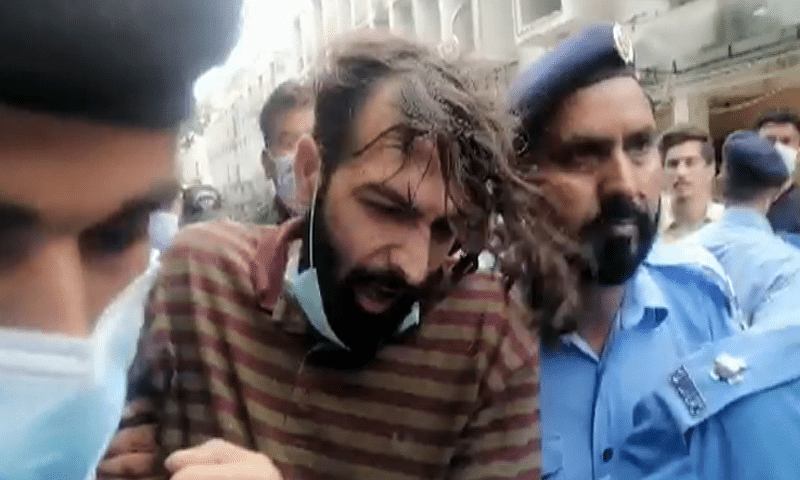
1. A Shocking Crime and an Unfolding Horror
On July 20, 2021, 27-year-old Noor Muqaddam, daughter of a former Pakistani diplomat, was found brutally murdered at the residence of her acquaintance, Zahir Jaffer, in Islamabad’s upscale F-7/4 sector. Noor was held captive, tortured—reportedly with brass knuckles—and ultimately decapitated. Her attempts to escape were thwarted by household staff. The case sparked national and international outrage. The News International
2. Initial Conviction: Justice Delivered
The trial began in October 2021, with the prosecution presenting compelling forensic evidence, CCTV footage, DNA matches to the murder weapon, and witness testimonies. Despite attempts by the defense to claim mental instability, Zahir Jaffer was deemed mentally competent. The News International
On February 24, 2022, an Islamabad sessions court convicted Jaffer of premeditated murder and rape, sentencing him to death. He also received a concurrent 25-year prison term for rape (with a fine), while two household staff received 10-year terms for abetting. Jaffer’s parents and a therapist were acquitted. The News International
3. High Court Upholds Sentences, Intensifies Penalty
On March 13, 2023, the Islamabad High Court (IHC) upheld Jaffer’s death sentence for murder and added a second death sentence for rape, overturning the life term. The staff’s sentences were also upgraded to life imprisonment. The News InternationalDunya News
4. Public Reaction: Outpouring of Relief and Advocacy
After the IHC verdict, netizens expressed relief and praise, highlighting the persistent struggle of Noor’s father to secure justice amid widespread gender-based violence. Dunya News+1
5. Supreme Court Engagement: Defense Challenges Evidence
The appeal reached the Supreme Court, where hearings resumed around mid-May 2025. The defense, led by Salman Safdar, challenged the reliance on CCTV footage, noting a lack of forensic or eyewitness confirmation, questionable integrity of the post-mortem, and incomplete mental health examination of the accused—which was not addressed during the original trial. SAMAA TVUrduPoint
6. Written Verdict: SC Affirms Final Outcome
On June 10–12, 2025, the Supreme Court issued its detailed ruling:
-
It upheld the death sentence for Jaffer’s murder.
-
Reinstated life imprisonment for the rape charge (revising the IHC’s second death sentence).
-
Maintained the staff’s convictions and sentences.
-
Emphasized that video evidence, when properly authenticated, holds up as primary proof—even without eyewitnesses. Safety and Security TodayThe News International
By affirming these verdicts, the Court sent a powerful message about accountability and the evolving role of digital evidence in Pakistan’s criminal jurisprudence.
Why This Case Matters
-
Justice in Action: The case concluded with the highest standard of the law applied, irrespective of the high social standing of the accused.
-
Legal Precedent: The SC’s acknowledgment of video evidence as credible stands to reshape how courts handle future cases, especially where witnesses are scarce.
-
Social Momentum: The public’s steadfast demand for justice transformed this tragedy into a rallying point for women’s rights and judicial reform in Pakistan.
| Date | Milestone |
|---|---|
| July 20, 2021 | Crime committed & FIR registered |
| October 2021 | Trial begins |
| Feb 24, 2022 | Death sentence by sessions court |
| March 13, 2023 | IHC upholds and strengthens sentencing |
| Mid-May 2025 | SC hears appeal, defense presents arguments |
| June 10–12, 2025 | SC issues written verdict |
The Noor Muqaddam case signifies not just a horrific crime, but also a landmark in Pakistan’s legal history. It stands as a testament to perseverance: of a grieving father, an outraged citizenry, and a legal system bidding to uphold justice. More importantly, its impact continues to fuel deeper conversations on gender-based violence, digital evidence, and the responsibility of institutions to deliver fair verdicts—no matter the personal stature of those involved.
If you’d like, I can summarize key legal takeaways or explore how this case has influenced public policy and activism in Pakistan.