by admin | Oct 25, 2022 | Uncategorized
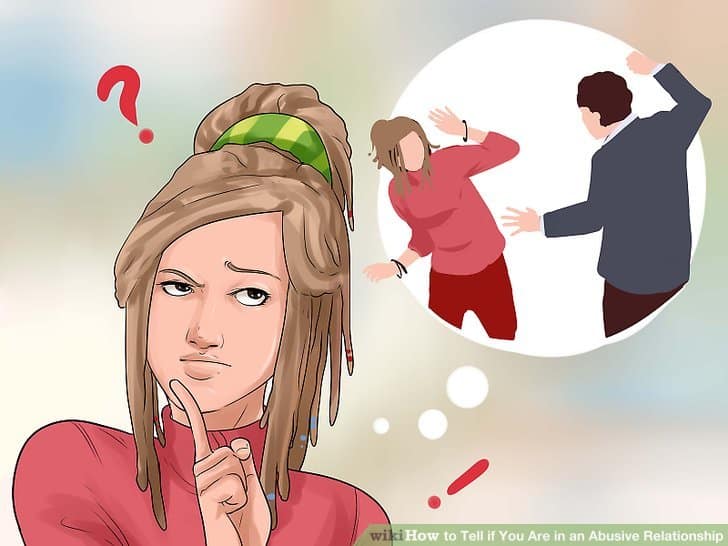
When domestic abuse is discussed a thought came across the mind of people that why these women do not leave their abusive husbands?
Domestic violence is repeating and unending cycle in which you can count physical, psychological, sexual, economic and emotional abuse. If Abuser controls everything and does not give a woman access to health, education, resources and even her parents, it is also included in violence.
Most women never left their abusive husbands, some left their husband after a long time of suffering because of multiple reasons. Many of them go to their parents’ house but just to go back, time and again.
The reasons include the following:
- Believing or hoping that the man will change
- Economic dependency
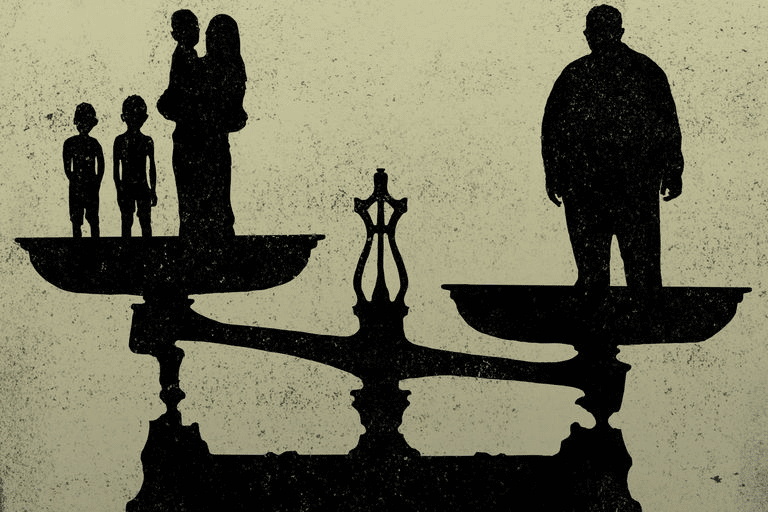
- For the sake of children (Children and Single Parenthood)
- Poor support system (Lack of intervention) and Social pressure
- Norms and myths, Personal guilt and the concept of personal failure
- Negligence of law enforcement agencies
- Fear of what the partner will do
When domestic violence starts at the beginning of relationship women tell their hearts that the abuser will change with time and they pass a long time hoping the same.
In Pakistani culture, a woman remains economically depended on all her life. This is a common expression that no one except husband will bear the expenditures after marriage. Brothers and family of a woman do not support her normally. After the marriage and kids, the woman starts thinking of her children instead of herself. This is our traditional belief that for a better upbringing a child should know and have both mother and father.
In Pakistan, we have a saying that “Once a woman leaves her mother’s house as a bride, she can only return in a coffin.” After the marriage, no one helps and support the woman so that she can overcome the abusive relationship. Even she always get suggestions to bear the pain as it is considered a tradition. Most of the families consider that if their daughter gets a divorce they will lose their dignity and respect in the society so they choose pain, trauma, abortions, miscarriages, sufferings and even death over their so-called respect.
People continue to believe in pseudo-self-created values but don’t respect woman’s rights as an equal human being even in the 21st century. Norms and myths hold women not to speak up. It is usual, it happens in homes, we fight most with the people whom we love, if a husband stops beating his wife it is considered that he has indulged in some other woman. These norms contribute more to increase domestic violence. It is also considered that women are weak they are nothing without their husband. Now millions of women have no self-esteem and they also consider them wrong and they accept all the pain as their fate.
If a woman takes some courage and gains the support of family members then our systems fail her. She fears to go to the police because they encourage both parties to compromise. Lack of interest, pressure from the man side and negligence of police leads her to step back. The same case is with our judicial system people avoid to take their cases to the court because of the inefficient system. Many of them fear that the person abusing them will harm them after coming back from jail because the state is not doing something tangible
Pakistan needs to adopt an approach of domestic violence cases being registered by the state rather than the family (Sindh police took this surprisingly smart step in a recent case) so the victims aren’t inevitably ‘pardoned’ every time in the name of so-called honour.
by admin | Oct 25, 2022 | Uncategorized
Patriarchy is a system of social organization that institutionalizes male power over women and puts male interests and values at the center of social life. Sylvia Walby explains patriarchy as “a system of interrelated social structures which allow men to exploit women.” This definition recognizes patriarchy as being institutionalized subordination and exploitation of women.
The supporters of patriarchal society justify patriarchy by attributing natural biological differences between men and women. They also focus on the influences that hormones have over biological systems. The ‘male hormone’ testosterone is responsible for masculinizing a man, whereas ‘female hormone’ estrogen feminizes a woman. In short, women are considered inferior to men intellectually and physically. According to this social system women role in society is to reproduce and serve men in the household. On the basis of recent studies and researches, it can be rightly said that there is no correlation between skull capacity and brain weight and intellectual power, yet there is still a constant struggle of gender bias in science.
Some theories also discuss patriarchy through a psychological perspective based on gender differences in psychology which are the differences in mental functions and behaviors of the sexes. Such differences are found in a variety of fields, such as mental health, cognitive abilities, personality and tendency towards aggression. Males on average are more assertive and have higher self-esteem. Females were on average higher than males in extraversion, anxiety, empathizing skills, trust, and, especially, tender-mindedness. Women also reported a more intense and more frequent experience of affect, joy, and love but also experienced more embarrassment, guilt, shame, sadness, anger, fear, and distress
Patriarchy is a multilayered, multifaceted social structure that extends across all levels such as personal, interpersonal, social, institutional, in family, in community and in government etc. The pattern of violence within personal relationships and communities grew over time because patriarchy has developed and changed over time. Virtually in practice, all societies are more or less patriarchal in nature, whereas there is no such evidence found in constitutions and laws governing such societies. The factor of patriarchy has itself integrated with the social, moral, legal, political, religious and economic organization of various cultures.
The process by which children acquire the values, motives, and behaviors viewed as appropriate for males and females within a culture is called gender typing. Children develop gender-based beliefs, largely based on gender stereotypes; which reflected in gender roles later. Children adopt a gender identity early in life and develop gender-role preferences as well.
Patriarchy has an immense impact on the lives of women in every field of life. For instance, in state/government women have less formal power and representation. In the household, they are considered a machine who produce the children and raise them. Moreover, they are more likely to being abused physically, psychologically, emotionally, socially and economically. They have fewer opportunities in professional life and also paid less. They are treated negatively in terms of sexuality. They are more misrepresented and used as a commodity in media and popular culture.
Patriarchy is a social system so, all men do not participate or experience patriarchy in the same way. Patriarchy does not necessarily mean that every man has control over every woman in every context. Various groups, most notably the feminist movement, have led efforts to change aspects of patriarchy that they believe are oppressive or inaccurate.
by admin | Oct 25, 2022 | Uncategorized
From mainstream media to entertainment, portrayal of women as ‘damsels in distress’ is a phenomenon all too common
Aroosa Shaukat
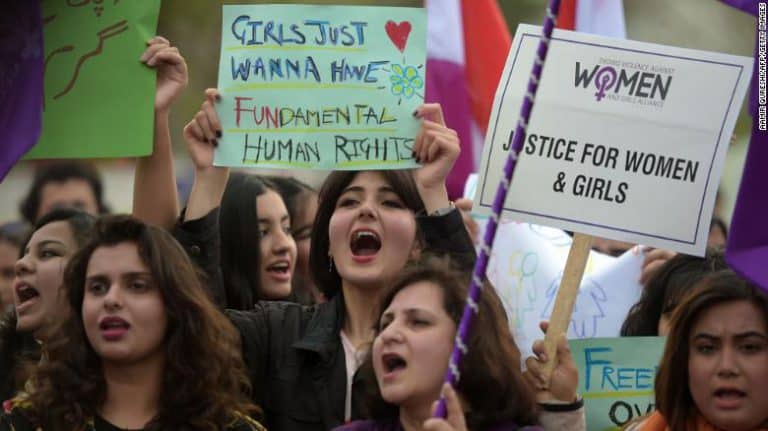
But the battle is far from over. From mainstream news media to entertainment industry, portrayal of women as the usual ‘damsel in distress’ is a phenomenon all too common, says White Ribbon CEO, Omer Aftab. “There has been so much reinforcement of stereotypes altering societal attitudes for so long that it almost always puts the blame on women, even when they are the victims,” he says. A campaigner for women’s rights, Aftab says fighting patriarchy is all the more challenging since it exists in varying forms in different strata of the society.
For rights campaigners, sensitisation of mainstream media has remained a challenge for far too long, says Aftab. Citing instances of news coverage of rape and abuse forcing victims to flee their neighbourhoods and even cities, Aftab says, at times, news coverage has amounted to nothing short of a ‘second assault’ on abuse survivors. And it doesn’t end there. With crime re-enactment shows taking much of primetime spots on news channels, the focus has been on sensationalising crime. “Somewhere in that process, the plot is lost. There is indirect condemnation of the victim instead of the perpetrator,” he says.
In 2013, a media code of ethics was developed by White Ribbon following focused group discussions with journalists across the country, which was endorsed by over 150 journalists at its launch the same year. With vows made to re-evaluate news reporting, rights campaigners felt mainstream journalists made an effort to act responsibly. Aftab notes that in the past five years there has been a noticeable change in how media reports such stories, though the same remains questionable in some quarters. Another problem is the tone set in some talk shows, especially by hosts. “What needs to be understood is the influence these individuals carry. We also need to look at the mindset of the people in media itself, and how that shapes public opinion and attitude,” he says.
Mazaaq Raat, a television talk show aired on a private news channel, which featured Mohsin Abbas, recently started issuing disclaimers following the domestic abuse allegations against the actor-singer. The disclaimer stated that the channel has distanced itself from the actor in the wake of the recent allegations since some episodes were recorded prior to the case, they have content that features Abbas. The channel has said that until the actor clears his name, he will not be part of future episodes of the show. The disclaimer was run recently before and during the airing of the show.
Aftab says some major cases of violence were brought to light after these were taken up on social media. Allegations against Abbas were also initially taken up on social media following her wife’s posts on Facebook and Twitter. “Voices that are being raised through social media are difficult to silence,” says Aftab. However, for campaigners the difficulty is in gauging how media weighs out issues of abuse and social injustice against other mainstream stories. For rights activists, convincing mainstream media to continue to focus on these issues remains difficult. “Unless there is an incident, no one is willing to take up the issue till there is a pressure from social media. Wait for another ten days and see how many in the news media continue to talk about abuse or violence against women.”
by admin | Oct 25, 2022 | Uncategorized
While fighting for the freedom of Pakistan Fatima Jinnah and Begum Rana Liaquat Ali Khan did not know that in the country they are struggling for women will not be free in reality. Pakistan came into existence in the name of Islam and founded by a Muhammad Ali Jinnah who had pluralistic values. He formed Pakistan so that every human being can live freely but still after passing 72 years vulnerable members of our society especially women are not enjoying the True liberty.
People need to understand that women have been created free just like men and they have the right to live without any intrusion of others which is natural and legitimate desire. Because of some cultural values and norms, women are being treated inhumanly in Pakistan.
This year Pakistan will celebrate 73rd of its independence. The question arises that, are women in Pakistan really free? Do women enjoy the same freedom in all aspects of life as compared to men in Pakistan? We realize that In 72 years we could not apply basic human competency and decency completely. We could not eradicate domestic violence, physical, psychological, sexual, economic and emotional abuse, acid attacks, molestation, harassment, child and forced marriages, forced prostitution, honor killings and modern slavery of women. Most of our women do not have access to health, education, and other resources. So the answer is crystal clear “Not”.
According to the Global Slavery Index, 16.8 persons per 1000 population estimated 3.19 million live in modern slavery and Pakistan Ranks 7th out of 10 countries that comprise 60 percent of modern slaves.
Many NGOs like White Ribbon Pakistan have been working to eradicate inequality and injustice against women and create awareness. Many laws have been made because of the efforts of human rights activists and NGOs but lack of implementation of these laws create chaos in society. Government of Pakistan seems serious to deal with the situation and have adopted a number of key international commitments to remove gender inequality and deliver women’s human rights but the feudal mentality and the system of patriarchy are not letting the nation grow positively.
People of Pakistan who believe in gender equality remain mute and sedated. Our moral and social growth is suppressed. So, we have to grow up morally, socially and politically to end the violence against women and eliminate the inequality among genders. We need to resist the dogma and declare ourselves ready for a different world in which we are against the awful things done in the name of honor. We need to work towards acceptance across genders. We need to embrace education so that we can end our collective abuse.
Independence Day is celebrated with extraordinary enthusiasm at the public and private level in Pakistan. We must deal with the issues of Pakistan with the same eagerness and must not remain silent especially when we need to respond urgently as a society. We hope that one day the whole nation regardless of gender, religion, caste and creed will celebrate Independence Day in Pakistan.
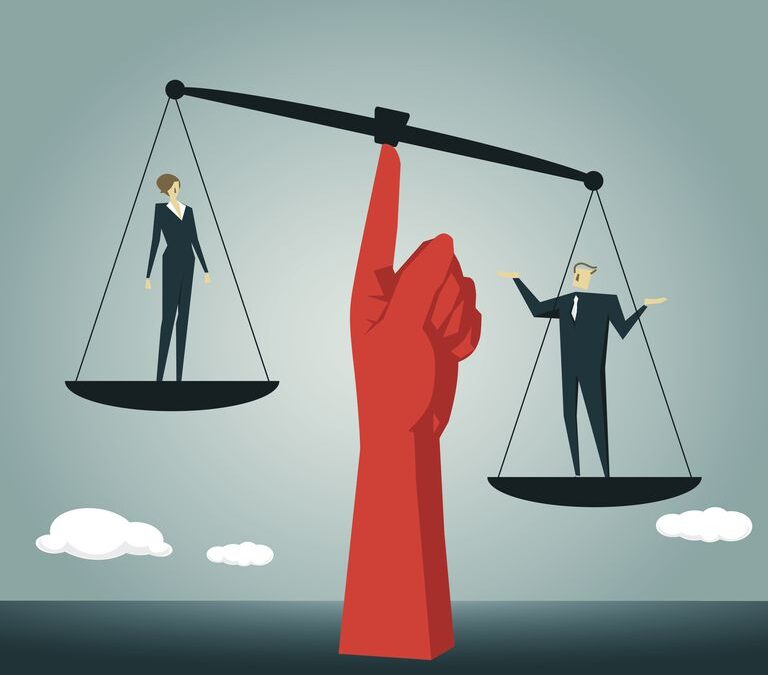
by admin | Oct 25, 2022 | Uncategorized
In the Stone Age times, most of the societies were called Hunter-Gatherers. The role of men and women were different in these societies. These roles were defined because of biological difference between genders. Most of the women had the role of gathering and men had the role of Hunter. In the society, man would make hunting tools and hunt and the women would do the rest such as gathering wild plants, seeds, nuts and other things from the wild, cook the food, take care of the children, make the clothes with animal fur and make accessories with bones. Both were working hard to survive but the roles were different.
Human go through many ages after stone age and different kind of societies developed but Historical evidence suggests that patriarchal social structures did not develop until the end of Pleistocene era around 11,700 years ago, in which nearly all of the societies were relatively egalitarian ones, i.e ‘equality for all.’
After the Pleistocene era Agriculture was started and people began to settle down. Then they had properties and resources to be protected and preserved. The system of passing property to the male children was started. For the protection of property physically stronger men brothers, sons, fathers, grandfathers, and uncles used to live near to each other. The custom was started that females move to live with their husband’s family. Men had enough support and power than women and it became the base of inequality among genders. And women almost lost the support from the group they grew up with and start living in oppression as they had no choice.
Patriarchy a system of social organization was developed. The system institutionalizes male power over women and puts male interests and values at the center of social life. In this social system, men hold primary power and predominate women in every role and every field.
Concept of patriarchy is based on masculinity, biological differences and gender roles defined by the social system. Patriarchy and male dominance are always justified by attributing natural differences between men and women. Historically, patriarchy has manifested itself in the social, legal, political, religious, and economic organization of a range of different cultures.
The Greek Philosopher Aristotle portrayed women as inferior to men morally, intellectually and physically. These works saw women as property of men and claimed that women’s role in society is to reproduce and serve men in the household. He used to observe men as being superior and perfect.
About six hundred years ago, the concept of ‘Fatherhood’ emerged as the beginning of the spread of patriarchy. And the theorists of 16th and 17th Century agreed with Aristotle’s views concerning the place of women in society.
These beliefs were questioned by some intellectual authorities, including Diderot’s encyclopedia and by works of Sarah Grimke in the 19th century. In the 19th century, many efforts were made for gender equality but a big change has come after the feminist movement started in the 1970s. Feminist Theory defines Patriarchy as an unjust social system that enforces gender roles and is oppressive to both men and women. According to Boserup, women have inferior positions because they are denied access to training and education. From the perspective of modern Jungian psychology, patriarchy can be seen as an immature form of masculinity and an attack on masculinity and femininity both.
Many activists and scholars have called for ‘Culture Repositioning’ as a method to deconstruct patriarchy, male chauvinism, and sexism. Restoring and strengthening equalit