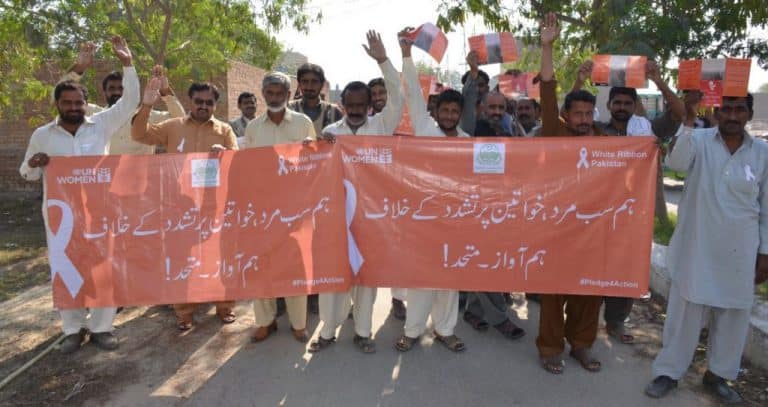


White Ribbon pledge campaign launched

White Ribbon pledge campaign launched

White Ribbon marked the White Ribbon Day for Elimination of Violence against Women and launched a nationwide pledge campaign in connection with International Day on Violence against Women falling on November 25.

White Ribbon launched its official theme of the year #iPledge. The purpose of launching this theme is to engage the maximum number of people especially men and boys to take the pledge; Never to Commit, never to support and never to remain silent about Violence against Women.

At the launch CEO, White Ribbon Omer Aftab showed solidarity with victims of violence. Expressing concerns over current condition of Pakistani women, he stressed on the need of immediate steps for the eradication of violence against women. 1 out of 5 women in Pakistan faces domestic violence and the ratio has alarmingly increased by 20% in recent years.

Omer Aftab explained that the objective of the campaign is to raise awareness of women’s rights, strengthen support mechanism for victims of violence and advocate for pro-women legislation. Fulfilment of women rights is an ongoing struggle and all the stakeholders must join hands for this cause, he added.

White Ribbon is men’s movement to end violence against women with a unique approach of addressing the patriarchal mindset of individuals and the society. We believe it is not sufficient to create awareness about women rights among women only but it is necessary that men join along with them; to encourage norms of consent, respect and gender equality; to challenge the unfair power relations which promote gender-based violence.

Support Mechanism for Domestic Violence Victims

Support Mechanism for Domestic Violence Victims

Domestic Violence (DV) remains an enormous social problem In Pakistan. Generally, female domestic violence is considered a private family issue without any appropriate focus on assessment, intervention, and solutions in Pakistani society. Women have to bear violence and discrimination on a daily basis due to the misuse of social and cultural values in the Pakistani society.

Pakistan ranks as the sixth most dangerous country in the world for women, with cases of sexual crimes and domestic violence recording a rapid rise. Activists blame society’s patriarchal attitudes for the problem.

According to the Pakistan Demographic and Health Survey

  • 7% of women have experienced violence during pregnancy.
  • 34% of ever-married women have experienced spousal physical, sexual, or emotional violence.
  • The most common type of spousal violence is emotional violence (26%), followed by physical violence (23%).
  • 26% of ever-married women have sustained injuries. Cuts and bruises are the most common types of injuries reported.
  • 56% of affected women never sought any help or talked with anyone about resisting or stopping the violence.

There is legislation for domestic violence in Pakistan and it is enforced too but the conviction rate is very low. According to the recent report, in Punjab, registered cases of domestic violence are more than one-third of all criminal cases but the conviction rate is almost 2.5 person of all registered cases. Remember these registered cases are just the tip of the iceberg because most of cases go unreported.

Victim can go the police to file an FIR and even for protection. In Pakistan situation is not ideal but better from the past now police give protection and send the aggrieved person to the shelter home and take action against the offender. but it does not happen all the time because of the corrupt system and lack of resources. unfortunately, In Pakistan, most of women even don’t know about protection bill and don’t seek shelters from the government.

In case of fear of death and severe injuries an aggrieved person can apply for obtaining a protection order under section 9. If the Court is satisfied that any violence has been committed or is likely to be committed, the Court may pass a protection order in favour of the aggrieved person and direct the defendant:

In the province of Punjab, there is Women’s Toll-Free Helpline 1043 available 24/7. Managed and supervised by PCSW. In the province of Sindh, women helpline 1094 is working to do the same. In Khyber Pakhtunkhwa a toll-free helpline ‘Bolo’ (Speak out) 0800-22227 is working for women of confronting any distressing situation or condition. Ministry of Human Rights has a help line: 1099 to assist women about the religious and legal protection and right to inheritance.

Social Welfare Department established Dar-ul-Aman in all 36 districts of Punjab to give shelter to the women victims of violence. These homes can accommodate 20 to 50 residents at a time.

Social welfare department is running Dar-ul-Aman in other provinces too but they are less in numbers. Even in Baluchistan The Dar-ul-Aman facility is available only in Quetta.

In Sindh a non-profit organization Panah is also running a project called “Panah Shelter Home” located in Karachi.

In the province of Punjab “The Punjab Commission on the Status of Women” is running a project Transitional Housing for Women. It is envisioned as a residency program that includes support services and is designed as a bridge to self-sufficiency. The objective of setting up Transitional housing for women victims of violence across Punjab is to provide survivors of violence with safe and secure housing so that they are not forced to live in other substandard/unsafe conditions or return to their abusers.
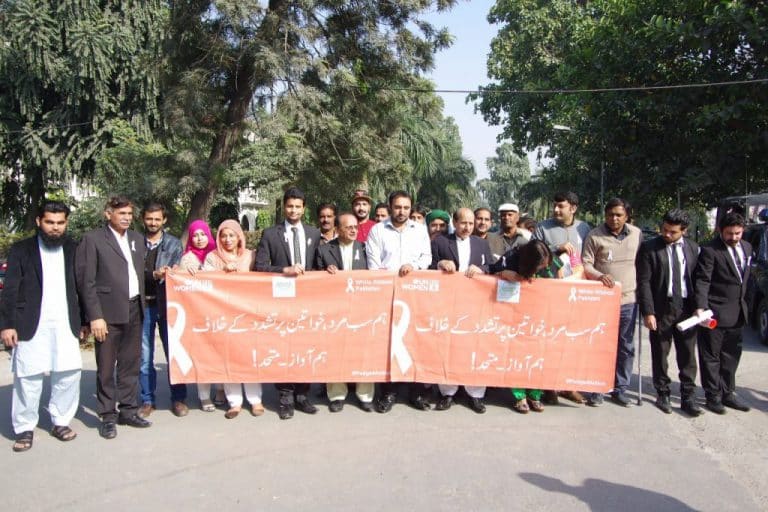
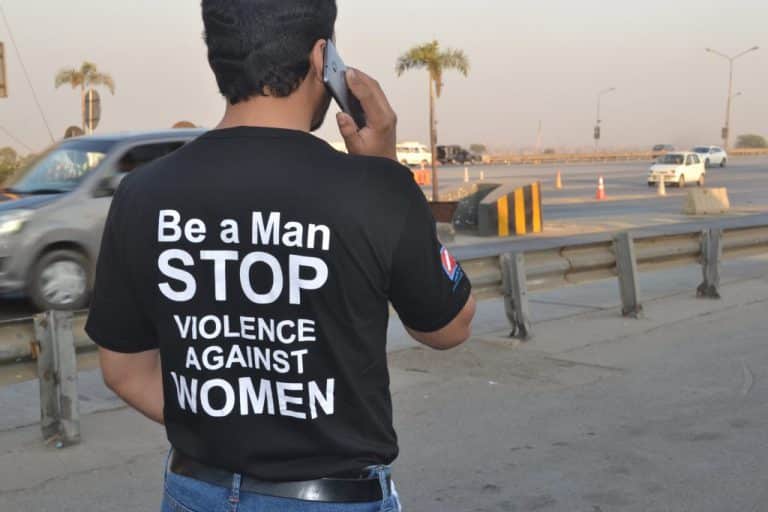
How Men Engagement Can Reduce the Violence Against Women

How Men Engagement Can Reduce the Violence Against Women

Researches and practices show that men can play a significant role in ending violence against women. So, we focus on men’s role in preventing violence. Men can influence the results by changing their behaviour and convincing others to stop violence against women too.

Men are not born violent. Some become violent because of destructive beliefs and expectations about what it means to be a man. Many cultural norms are contributing in violence against women. The social system of patriarchy is the most prominent reason which causes violence against women. Gender biasedness and discrimination of that social system is made by sexist minds who wanted to exploit women and put male interests and values at the centre of social life. Working with men and boys can offer new models of masculinity and manhood, which reject gender violence and build respect for women and girls.

Because patriarchy is related to men so, we have to consider working with them to resolve cultural issues and change their mind. So, Gender violence needs to be approached as a men’s issue. Overwhelmingly men hurt women so, working with men and boys can end violence against women.

Not every man supports the patriarchal mindset. Most men respect women and do not believe in violence against women. Educating these men can mobilize them to support the change by choosing not to commit violence and challenge those men who do.

Involving men and make them recognize their responsibilities to reduce gender-based violence and ensure the safety of women and girls. Engaging men make them feel that Women, children, and men are all hurt because of violence. so, their participation can make life safer for everyone.

Peer pressure is very prevalent in our society we can use it to end violence against women. People listen to their peers or they care about opinions of others. So, we can mobilize men and boys to talk to each other about respect for women and girls, and share information about violence prevention with other men in their families, workplaces, and communities.

Our men engagement campaign convinced many men who hold a good position in the society. These decision-makers and opinion leaders are providing their political, financial, and moral support in ending violence. we are hopeful that more common men and influencers will join our campaign to reduce the violence from the society.

How to engage men to lessen the violence at the individual level

How to engage men to lessen the violence at the individual level

Practitioners, policy advocates, and researchers have come to an agreement that we must engage men and boys across the individual, community, institutional, and societal levels to end violence against women (VAG). So, it is important to work across different sectors to effect change at different levels of the social ecology.

To bring change at the individual level we must start from the adolescents because in this age boys develop attitudes, gender relations and gender identities. Starting male engagement program at school level and reaching out to young boys at home and playgrounds too is necessary to form their positive attitudes towards opposite gender. We must teach young boys to adopt positive masculinities through well-tested, evidence-based group-work methodologies to form more equitable gender relations.

We must highlight the positive role of men in front of boys for instance caregivers. we must persuade them to be caregiver withing their families and then communities because men’s involvement with their families is an important component of supporting their social reintegration in post-conflict situations. Youth must be taught that social justice is crucial to have a better life so boys and girls have to struggle together to have one.

We are running unique and most effective men engagement program which focuses on fatherhood concept. We have observed that most abusers don’t listen to anyone regarding their behaviour but when it comes to the education of their children they do listen. When we tell them that their violent behaviour can affect the healthy development of their children and they can imitate them now and in future too, this affects more than anything and they start trying to change their violent behaviour for their children.

How to engage men to lessen the violence on the community level

How to engage men to lessen the violence on the community level

To tackle the violence against women and girls, we must ensure community-level prevention and response mechanisms. Evidence shows that the traditions, beliefs, norms and practices that operate within communities are major barriers to women’s access to justice, protection and freedom from violence. Social norms and practices can make it difficult for women to formally report violence and seek justice so, it is crucial to confront these barriers.

Engaging at the community level is essential to improving support to survivors of violence, who tend to turn to the community rather than to formal services. community-level support and referral networks are therefore needed alongside interventions to improve the provision of specialist Violence Against Women and Girls (VAWG) services.

Organizations with initiatives to engage men and boys in preventing violence against women focus on group education, community outreach, mobilization and mass media campaigns to reduce the violence against women and girls. We can use the “gender transformative” approach which challenges rigid gender roles and question the influence of social-cultural, community, and institutional factors as well as individual beliefs and attitudes.

To end the VAW at the community level we have to confront the dominant and harmful norms of masculinity that are viral. Peer pressure is one of the reasons that gender-based violence (GBV) takes place. We must give support to those who are dealing with peer pressure and condemn those who are promoting harmful ideas. If the whole community starts opposing VAW we can use peer pressure to end violence too by social influences and promoting positive norms of masculinity.

Organizing men to undertake action by discussing positive masculinities is effective to make them change their attitudes and behaviors. We must focus on increasing the role of men in responding to the VAW it will encourage other men to do the same and discourage those who are involved in VAW.

We must involve the community and religious leaders to address the harmful traditional practices and ask them to promote reforms and bring change in the community. We can attain a positive change by giving a religious point of view and positive social norms without challenging the patriarchal basis of their authority.