How to engage men on institutional level to lessen the Violence Against Women

How to engage men on institutional level to lessen the Violence Against Women

Individual and community level strategies for change must be complemented by initiatives directed at reforming the institutions that shape people’s lives and affect women’s and girls’ vulnerability to violence and their ability to access needed services.

Women’s movements throughout the world continue to exert pressure for policy change, but programming with men on Gender Based Violence (GBV) prevention has rarely focused on advocating for policy development on such violence. Mobilizing men on issues of GBV and gender equality can make them actively involved in policy advocacy and campaigning.

We must identify and nurture internal champions to facilitate Institutional reforms. initiatives and mainstream gender training can provide the necessary leadership to initiate and sustain institutional reforms. We need to invest sufficient time and resources to train and then mentor the people who can further influence others to bring policies that can reduce the Violence against women and girls. Reforming the policies and ‘cultures’ of male-dominated institutions is an important priority for male engagement programming to end VAWG.

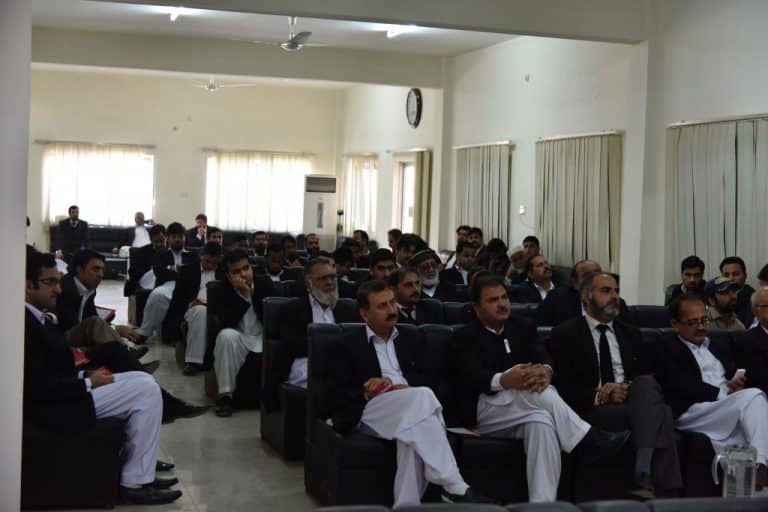
Arranging workshops on women’s rights, gender equality, and institutional responsibilities can be proved effective to bring institutional reforms. We can persuade them to stop Violence Against Women and Girls (WAWG) by sensitizing them about gender socialization, harmful norms of masculinity and best practices. It will motivate them to commit to change institutional culture and practices concerning VAWG.

Another promising and relatively neglected area of work with men on ending VAWG is to address the role that men can play to create a more conducive public environment for efforts to end VAWG. The principle of men holding other men accountable for their patriarchal behavior should be extended to holding male authority figures accountable for their public discourse.

Working with Men and Boys for Change at The Societal Level

Working with Men and Boys for Change at The Societal Level

In recent years, significant progress has been made in Pakistan concerning legislative and policy action on Violence Against Women and Girls (VAWG). But the real problem to be tackled is inadequate funding and implementation of such laws and policies. Men dominate all the institutions, development of policies and laws, implementation and enforcement of laws and the provision of justice all are in control of men. From workplaces to schools to law enforcement and justice systems, these institutions not only tend to be led by men but are often infused with the very patriarchal norms and ‘cultures’ that underpin VAWG So, it is critical to target the men to improve the situation and end the violence.

Justice remains in inaccessible and unresponsive to women and girls because of many reasons. The government, law enforcement agencies and justice officials can play their roles to end the violence.

Male engagement at the societal level is vital for gender equality and social justice. We have to take sustainable actions to challenge inequitable norms and practices of masculinity. Designing and developing interventions requires a movement-building perspective that can contribute fetch change in a community or society. This requires attention to fostering links between organizations and investing in movement-building opportunities, focused only on working with men on positive masculinities and those working on women’s empowerment.

The challenge of ending VAWG is the challenge of changing unequal relations of political, economic, and social power. Supporting the efforts of social movements, which are campaigning for gender justice as part of their social justice work, and targeting male engagement work within such social movements to enlist their support as allies is an important direction for male engagement programming to take.

First-ever Hum Women Leaders Awards to Honor iconic trailblazers

First-ever Hum Women Leaders Awards to Honor iconic trailblazers

Hum Network Limited took the initiative to recognize and honor the contribution and achievements of iconic women from Pakistan and around the world.

Hum Network honored “Omer Aftab” also, The only male champion of change amongst 11 distinguished women. Omer Aftab received the 1st “Lux Hum Women Leadership Award” for his contributions toward social reforms and women empowerment.

How to overcome anxiety and financial stress over coronavirus pandemic

How to overcome anxiety and financial stress over coronavirus pandemic

The survival of the fittest can be a perfect phrase that can describe our world today.

The coronavirus pandemic has hit the world so hard that it is impossible for most of us to comprehend its magnitude. No matter how many problems have existed before, we have never experienced the world to come together, and fight for a single cause as one enormous family.

It is comforting to see the empathy for every country and nation, but also very disheartening to see how unprepared we were for a pandemic crisis like this. This novel coronavirus pandemic has forced us to ponder on how we all used to take our lives for granted. How ill-informed we were about our capacities and strengths.

The definition of a superpower – a country that could dominate and exert influence on a global scale through its means of economic, military, technological, and cultural strength has entirely changed to a nation that can save its people’s lives with the best of health facilities.

Now the next question is, how to survive the economic crisis? At this moment, no expert can analyze and share an accurate picture of the abyss we will fell into.

It is anticipated that millions of employees will be laid off, and the world economy will be shaken to its core. But what you and I can do about this?

The foremost step is to accept the current state of affairs. To overcome anxiety, we must accept that our lives are going to be changed for a while and we should focus on areas that we can control. Focus on your strengths and abilities and remember the last time, when things got bad, and how you got through them.

We all have a role to play, to do what we do best. We must understand that this pandemic will leave us with other serious problems which might take some time to get back to normal. However, we must remember that working hard and taking care of our mental health is the key to survival.

These are the three ways you can overcome anxiety about this pandemic and your financial stress:

Take care of your body

Some exercises can really heal you from inside. Take deep breaths, stretch, or meditate. In these times, nervous eating is the most common habit so try to avoid that. Eat healthy, well-balanced meals on time. Regular exercise and 7-8 hours’ sleep can truly reduce your stress levels.

Make time to unwind

This is true that a person who follows one hobby can sustain good mental health. Do something creative, which makes you feel productive in these days of quarantine? For some, it can be cooking or painting, or playing music, or even getting closer to God.

Organize Work From Home

For many of us, working from home is a new routine. Therefore, understanding that this is the only option can make you understand that things will be different for some time but not necessarily unproductive. Get up early in the morning and dress up so you can follow a schedule. Make a to-do list and follow it one by one. By the end of your working hours, it will give you a sense of accomplishment and you would feel less stressed about your job or business. Stay connected with your co-workers. Listen to their issues, help each other follow a work from home routine. Be concerned, be supportive.

Connect With Others

Fear and anxiety are natural and normal emotions to experience. The fear over the coronavirus has taken us all down, but it should not consume our lives completely.

The anxiety we all feel is the fear of the unknown. We, humans, are programmed to schedule, plan, and control our lives. When this is taken from us, especially collectively, we feel scared and the fear of what will happen next increases our stress and anxiety.

We all react differently when we are challenged with anxiety. Some people start overacting by hoarding of food, unwanted items to take control of their situation. While some are glued to all mediums of information.

In these tough times, for the sake of our mental health, we should only stick to the facts, and not follow and believe everything that we hear and read. Only check trusted sources for information and updates. There is no need to watch the news all day. Talk to people who you trust. Social distancing doesn’t mean you disconnect with the world. Talk to your trusted people about your fear, anxiety, and concerns. Tell them how you are feeling.

Coronavirus came like an unpleasant surprise. Rather than creating a panic, we must learn from others and adopt the best practices. We all must exercise crisis management and mold our routines accordingly.

We are in deep rapture, and so in deep opportunity. It is up to us how we deal with these times and become a source of hope for ourselves and our loved ones. We must learn to accept and adopt one thing at a time.


Lockdown brings a rise in domestic violence

Lockdown brings a rise in domestic violence

Because of the coronavirus outbreak, Pakistan faced two-months nationwide lockdown. Lockdown exacerbates widespread stress across the society which led to many problems especially for women and girls because it aggravated domestic violence both physical and mental and brought more misery to their lives.

Pandemic stress and social isolation intensified gender-based violence because victims of domestic abuse were trapped with their abusers at home. Frustrated Domestic violence perpetrators spending the whole day at home worsened the situation for women and girls.

During the crisis, women take on additional physical, psychological and time burdens as caretakers. On the top of that imagine the stress and pain of women who got confined in a toxic violent situation for almost two months behind the closed doors especially in the small houses of one room where they even do not have chance to stay away from the abuser.

For those women who are sole earners for their families facing a high level of depression and anxiety because of unemployment or not getting salaries and wages. These women facing family pressure and domestic violence for not earning and getting money home.

In Pakistan, we can only guess that to what extent domestic violence is aggravated by the COVID 19 and lockdown. It is hard to measure because it is happening behind closed doors and it has a long history of under-reporting.

Financial constraints and stress deepen domestic abuse while no services were available in the whole country to support the victims. Only one helpline of the Ministry of Human Rights 1099 was available from 10 am to 10 pm to assist women.

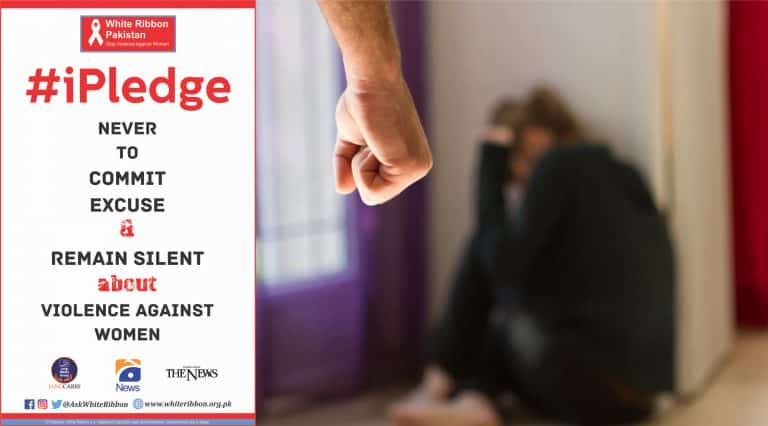
In these difficult times, the government cannot focus on all issues, so we as a society have to come together to solve this kind of issues. We need to understand that this is a testing time for everyone, and frustration levels are high, but none of this can excuse causing harm to another person. Family, friends and neighbours should start supporting the victims of domestic violence. So, break the silence to end domestic violence and pledge today never to commit, excuse and remain silent about violence against women.